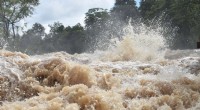
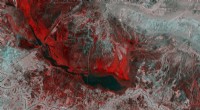
Imagine a river overflowing its banks during a flood. The water spreads out over the surrounding land, carrying a load of sediment - sand, silt, and clay. As the floodwaters recede, the sediment is deposited along the river's edge, creating a raised embankment. This embankment, built up over time by repeated floods, is called a natural levee.
Here's a step-by-step breakdown of how natural levees form:
1. Flood Occurs: When a river overflows its banks, the water's velocity decreases as it spreads out over the floodplain.
2. Sediment Deposition: As the water slows down, it loses its ability to carry the sediment, causing it to settle out. The heavier sediment settles first, forming the base of the levee. Lighter sediment, like silt and clay, is deposited further away from the river channel.
3. Levee Formation: With each subsequent flood, more sediment is deposited, gradually building up the levee. This creates a raised embankment along the river's edge, higher than the surrounding floodplain.
4. Channel Confinement: As the levees grow taller, they confine the river's flow, causing it to become deeper and narrower. This further increases the river's velocity, creating a positive feedback loop where more sediment is transported and deposited on the levees.
Factors Influencing Levee Formation:
* River Size and Velocity: Larger and faster-flowing rivers tend to have higher and more pronounced levees.
* Sediment Load: Rivers with a high sediment load will build up levees more quickly.
* Flood Frequency and Magnitude: More frequent and intense floods lead to higher and more substantial levees.
* Geologic Conditions: The type of underlying sediment and soil also influence the formation and shape of the levee.
Significance of Natural Levees:
* Flood Control: Natural levees provide some protection from flooding by holding the river's water within its banks.
* Land Formation: Over time, levees can significantly alter the landscape, creating new landforms and influencing the development of floodplain ecosystems.
* Agricultural Value: The fertile soil deposited by floodwaters makes the land between natural levees highly valuable for agriculture.
By understanding how natural levees form, we gain a deeper appreciation for the complex processes that shape our landscapes and influence the dynamics of river ecosystems.