1. Providing Selection Pressure:
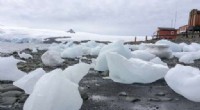
* The environment sets the conditions for survival. This includes factors like climate, food availability, predators, diseases, and resources. Organisms that are best suited to these conditions are more likely to survive and reproduce.
* Selection pressure is the force that favors certain traits. For example, in a cold climate, animals with thicker fur will have a survival advantage.
2. Variation in Traits:
* No two organisms are exactly alike. There is natural variation in traits within populations. This variation is essential for natural selection to operate.
* The environment acts on this existing variation. Some traits might make an organism more adapted to the environment, while others might make it less adapted.
3. Differential Reproduction:
* Individuals with traits that make them better suited to the environment are more likely to survive and reproduce. This is known as "survival of the fittest."
* They pass on their advantageous traits to their offspring. This leads to a gradual change in the population over generations, with the advantageous traits becoming more common.
Example:
Think of a population of deer living in a forest. Some deer have thicker fur than others. If the winter becomes colder and snowier, deer with thicker fur are more likely to survive because they are better insulated. They will reproduce more, passing on their thicker fur genes to their offspring. Over time, the proportion of deer with thicker fur will increase in the population.
In summary:
The environment acts as a filter, selecting individuals with traits that best suit the existing conditions. This leads to the evolution of species as they become better adapted to their environments. Natural selection is a continuous process, constantly shaping the diversity of life on Earth.