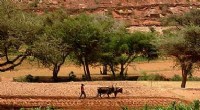
Cultivated land, also known as farmland, possesses several distinct characteristics that differentiate it from other land types:
Physical Characteristics:
* Soil:
* Fertile: Rich in nutrients like nitrogen, phosphorus, and potassium, crucial for plant growth.
* Well-drained: Allows for proper aeration and root development.
* Suitable texture: Appropriate particle size distribution for water retention and root growth.
* pH level: Within an optimal range for specific crops.
* Topography:
* Relatively flat: Facilitates ease of cultivation and machinery operation.
* Suitable slope: Minimizes soil erosion and allows for efficient water management.
* Water availability:
* Access to water: Irrigation systems or reliable rainfall for consistent crop production.
* Good drainage: Prevents waterlogging and ensures healthy plant growth.
Human-Induced Characteristics:
* Land Use:
* Dedicated to agriculture: Primarily used for growing crops, raising livestock, or producing agricultural products.
* Regular management practices: Includes tilling, fertilization, pest control, and crop rotation for optimal yield.
* Infrastructure:
* Accessibility: Roads, transportation networks, and storage facilities for efficient movement of crops and agricultural inputs.
* Irrigation systems: For water management and ensuring crop survival during dry periods.
* Ownership and Management:
* Private or communal ownership: Determines land use decisions and agricultural practices.
* Government policies and regulations: Impacting land use, crop choices, and agricultural practices.
Specific Characteristics Depending on Land Use:
* Cropland: Designated for planting and harvesting annual crops, such as grains, vegetables, and fruits.
* Pastureland: Used for grazing livestock, typically featuring grasses and legumes.
* Orchards: Dedicated to fruit trees, requiring specific soil and climatic conditions.
Environmental Considerations:
* Biodiversity: Cultivated land often experiences reduced biodiversity compared to natural ecosystems.
* Soil degradation: Intensive agriculture can lead to soil erosion, nutrient depletion, and compaction.
* Water quality: Agricultural runoff can contaminate water bodies with fertilizers and pesticides.
Socioeconomic Considerations:
* Food production: Cultivated land is essential for feeding the global population.
* Economic activity: Agriculture contributes significantly to economies through employment and revenue generation.
* Rural livelihoods: Farming supports the livelihoods of millions of people worldwide.
These characteristics emphasize the importance of understanding the unique features of cultivated land, including its natural attributes, human interventions, and environmental and socio-economic implications.