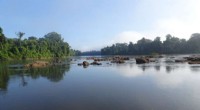
* Understanding the environment: A life scientist studying an ecosystem would be interested in the nonliving components, like the lake. They might study the lake's water chemistry, temperature, and flow patterns to understand how these factors influence the living organisms within the ecosystem.
* Tracing the history of life: Rocks can contain fossils, which provide evidence of past life forms. A paleontologist, a type of life scientist, would study these fossils to understand the evolution of life on Earth.
* Analyzing the impact of life on the environment: A life scientist might study the impact of algae blooms in a lake on the water quality. This would require them to study both the living algae and the nonliving water itself.
* Studying the interaction between living and nonliving things: A life scientist interested in biogeochemistry might study how rocks and soil interact with living organisms to cycle nutrients. This could involve studying the role of bacteria in breaking down rocks and releasing minerals.
Essentially, a life scientist might study nonliving things to better understand the context in which life exists and how living organisms interact with their environment.