For celestial objects:
* Telescopes: Used to gather light from distant stars, galaxies, and planets, allowing astronomers to study their properties and positions.
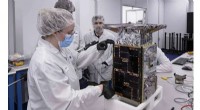
* Satellites: Space-based telescopes like the Hubble Space Telescope provide high-resolution images and data on celestial objects.
* Radio Telescopes: Used to detect radio waves emitted by celestial objects, allowing astronomers to study objects invisible in visible light.
* Astrometric Techniques: Use precise measurements of a star's position over time to detect the gravitational influence of unseen objects, such as exoplanets.
For terrestrial objects:
* GPS (Global Positioning System): Uses a network of satellites to pinpoint the location of objects on Earth.
* Radar: Uses radio waves to detect and locate objects, including aircraft, ships, and weather systems.
* LiDAR (Light Detection and Ranging): Uses laser pulses to create detailed 3D maps of the Earth's surface.
* Sonar (Sound Navigation and Ranging): Uses sound waves to detect and locate objects underwater.
Other methods:
* Triangulation: Uses the geometry of angles and distances to determine the location of an object.
* Parallax: Uses the apparent shift in an object's position when viewed from different locations to determine its distance.
The best method for determining the position of a faraway object depends on the specific application and the object itself.