1. Uneven Heating:
- The sun's energy heats the Earth unevenly. The equator receives more direct sunlight than the poles, causing temperature differences.
- This difference in temperature creates a pressure gradient, with low pressure at the equator and high pressure at the poles.
2. Air Circulation:
- Air naturally flows from areas of high pressure to areas of low pressure, creating wind patterns.
- This airflow is further influenced by the Earth's rotation, leading to the formation of global wind belts like the trade winds and jet streams.
3. Water Cycle:
- The movement of air also drives the water cycle. Warm, moist air rises, cools, and condenses, forming clouds and precipitation.
- This cycle is crucial for distributing moisture and affecting rainfall patterns.
4. Weather Systems:
- The interaction of air masses with different temperatures and moisture levels creates weather systems.
- Warm fronts, cold fronts, and other boundaries lead to changes in temperature, precipitation, and wind patterns.
Specific examples of how atmospheric motion causes different weather:
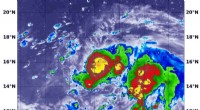
* Tropical cyclones: These storms form over warm ocean waters and are fueled by the release of latent heat as water vapor condenses. The rotation of the Earth helps to create the spinning vortex that defines the cyclone.
* Thunderstorms: These storms develop when warm, moist air rises rapidly, creating instability and triggering the release of energy in the form of lightning and heavy rain.
* Monsoons: These seasonal winds are caused by the uneven heating of land and sea. During the summer, the land heats up faster than the sea, creating low pressure over the land and drawing in moisture-laden winds from the ocean.
* Jet streams: These fast-flowing air currents in the upper atmosphere can influence the movement of weather systems and affect temperature and precipitation patterns.
In summary, the constant motion of the atmosphere, fueled by uneven heating and the Earth's rotation, creates a dynamic system that drives weather patterns. This motion leads to wind patterns, the water cycle, and the development of weather systems, ultimately shaping the climate and weather conditions we experience.