1. To Extend Our Senses: Our senses are limited. Tools allow us to:
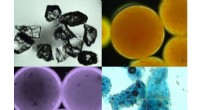
* See things that are too small: Microscopes help us see tiny organisms, cells, and even the structure of materials.
* See things that are too far away: Telescopes let us observe distant stars, planets, and galaxies.
* Hear sounds beyond our range: Microphones can pick up very faint sounds or sounds at very high or low frequencies.
* Measure things with greater accuracy: Rulers, thermometers, scales, and other measuring devices give us precise measurements.
2. To Collect Data: Scientists need data to form conclusions. Tools help them:
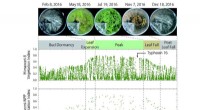
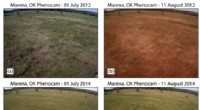
* Record observations: Cameras, video recorders, and data loggers capture information for later analysis.
* Collect samples: Nets, probes, and other sampling tools allow scientists to collect materials for study.
* Measure quantities: Tools like spectrometers, pH meters, and chemical sensors provide quantitative data.
3. To Manipulate Experiments: Tools are essential for setting up controlled experiments:
* Control variables: Devices like beakers, flasks, and ovens allow for precise control of conditions.
* Apply specific forces: Machines like centrifuges, spectrometers, and even simple tools like magnets can be used to apply specific forces.
* Isolate variables: Tools can help to focus on specific aspects of an experiment and minimize interference from other factors.
4. To Increase Accuracy and Precision:
* Reduce human error: Tools are more objective than human perception, minimizing mistakes and biases.
* Provide finer detail: Specialized tools offer a higher level of precision in measurements and observations.
5. To Explore New Frontiers: Scientific progress often relies on the development of new tools:
* Unlocking hidden worlds: Tools like advanced imaging techniques and gene sequencing allow scientists to study previously inaccessible areas.
* Enabling new discoveries: New technologies, such as high-powered lasers, particle accelerators, and space probes, have opened doors to new scientific frontiers.
In essence, tools are an extension of our scientific abilities. They allow us to observe, collect data, conduct experiments, and explore the world in ways that would be impossible without them.