Astronomy:
* Supernovae: The explosive death of a star, occurring only a few times per century in a galaxy like our own.
* Gamma-ray bursts: The most powerful explosions in the universe, thought to be associated with the collapse of massive stars or the merger of neutron stars, occurring a few times per day across the entire observable universe.
* Cometary impacts: Large impacts of comets with planets, potentially causing mass extinctions, thankfully occurring on timescales of millions of years.
Biology:
* New species evolution: While evolution is constant, the emergence of a completely new species can take thousands or even millions of years.
* Major evolutionary leaps: Events like the Cambrian Explosion, where a rapid diversification of life occurred, are rare in Earth's history.
* Viral pandemics: While viruses constantly evolve, a pandemic that spreads globally and causes widespread death is a relatively infrequent occurrence.
Geology:
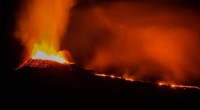
* Volcanic eruptions: While volcanoes erupt frequently, truly massive eruptions capable of significantly impacting global climate are rare, happening perhaps once every few thousand years.
* Major earthquakes: Earthquakes are frequent, but those of magnitude 8 or higher, capable of causing widespread devastation, occur only a few times per year.
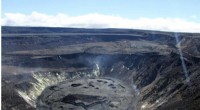
* Meteorite impacts: Most meteorites burn up in the atmosphere, but large impacts that leave significant craters are extremely infrequent, occurring on scales of millions of years.
Physics:
* Particle collisions at extremely high energies: These are only possible at facilities like the Large Hadron Collider, and even then, events of interest occur infrequently, requiring massive data analysis to identify them.
* Observation of rare particle decays: Some particles have extremely long lifetimes, making their decay events very rare and requiring specialized detectors and long observation times.
* Detection of gravitational waves: While gravitational waves are constantly emitted, their detection is extremely difficult, requiring sophisticated instruments and advanced analysis techniques.
Other:
* Scientific breakthroughs: True paradigm-shifting discoveries in science are rare, as they require a combination of ingenuity, persistence, and a confluence of factors.
* Nobel Prize awards: These prestigious awards are given out only once a year, and the selection process is highly competitive, making them a rare honor.
It's important to note that:
* "Infrequent" is relative. While some events are extremely rare, others might happen more often but are still considered infrequent compared to more common phenomena.
* Our understanding of the universe is constantly evolving, and as technology advances, we might discover more frequent events or even previously unknown occurrences.
Hopefully, this list provides some insight into the infrequent but fascinating events that shape our world and our understanding of it!