The Scientific Method in Earth Science
The scientific method is a structured way to investigate the natural world. In Earth science, it's used to understand everything from the formation of mountains to the causes of climate change. Here's a simplified breakdown:
1. Observation: This is where it all starts! Earth scientists observe natural phenomena. This could be anything from studying rock formations to tracking weather patterns or analyzing data from satellites.
2. Question: Observations lead to questions. Why do volcanoes erupt? How do glaciers form? What causes earthquakes? These questions guide the research.
3. Hypothesis: A hypothesis is a proposed explanation for the observation or question. It's a testable statement that attempts to answer the question.
4. Prediction: Based on the hypothesis, scientists make predictions about what they expect to see if the hypothesis is true. For example, if a hypothesis suggests that plate tectonics causes earthquakes, the prediction might be that earthquakes are more common along plate boundaries.
5. Experiment/Data Collection: Earth science often involves collecting data through various methods:
* Fieldwork: Directly observing and collecting samples in the field (e.g., taking core samples from glaciers, studying rock formations).
* Laboratory Experiments: Running experiments to replicate natural processes under controlled conditions.
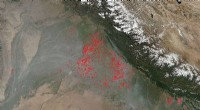
* Remote Sensing: Using satellites and other instruments to gather data from afar (e.g., weather patterns, atmospheric composition).
* Modeling: Using computer simulations to model complex Earth processes.
6. Analysis: Scientists analyze the data they've collected. This often involves statistical analysis, graphs, charts, and other visual tools to draw conclusions.
7. Conclusion: The analysis helps determine whether the data supports or refutes the hypothesis.
8. Communication: Scientists share their findings through publications, presentations, and conferences. This allows for peer review and the advancement of knowledge.
Key Features of the Scientific Method in Earth Science
* Empirical: It relies on observations and data from the real world.
* Iterative: The process is often cyclical, meaning results from one experiment can lead to new questions and further investigation.
* Open to Revision: Scientific knowledge is constantly evolving as new data and ideas emerge.
Examples of the Scientific Method in Earth Science
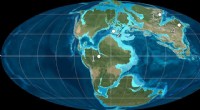
* Understanding Plate Tectonics: Observation: Earthquakes and volcanoes are concentrated in specific areas. Hypothesis: Earth's crust is made of plates that move. Experiment/Data: Study of seismic waves, magnetic field data, and rock formations. Conclusion: Evidence supports the theory of plate tectonics.
* Studying Climate Change: Observation: Rising global temperatures, melting glaciers. Hypothesis: Human activities are contributing to climate change. Experiment/Data: Studying atmospheric greenhouse gas concentrations, analyzing ice core data, and modeling climate scenarios. Conclusion: Strong evidence supports the link between human activities and climate change.
Important Notes
* Not a Straight Line: The scientific method is not always a straight line. Researchers may go back and forth between steps, revising their hypotheses or making new observations.
* Challenges: Earth processes often occur over long time scales, making direct observation difficult. It can be hard to replicate complex Earth systems in the lab.
Let me know if you'd like more examples or have any other questions!