However, you might be thinking about specific examples where the limitations of a scale become apparent. Here are a few scenarios:
* The pH scale: Measures the acidity or alkalinity of a solution. While it's a useful tool, it doesn't provide information about the concentration of acids or bases. It only indicates the relative amounts of hydrogen ions present.
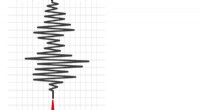
* The Richter scale: Measures the magnitude of earthquakes. It's logarithmic, meaning a one-point increase on the scale represents a tenfold increase in energy released. However, it doesn't directly correlate to the level of damage caused, which depends on factors like the earthquake's depth, distance from the epicenter, and local geology.
* The Kelvin scale: A thermodynamic temperature scale, it is absolute and provides a measure of the average kinetic energy of particles. However, it doesn't directly measure the heat or thermal energy transferred.
Ultimately, all scientific scales have limitations. It's important to understand the context and limitations of any scale to interpret its readings accurately.