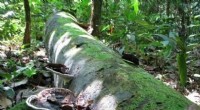
* Structure: Mosses have tiny, hair-like structures called rhizoids that act like roots. These rhizoids aren't as complex as roots in vascular plants, but they help anchor the moss to the substrate and absorb water.
* Capillary Action: The rhizoids and the surface of the moss leaves are made of tiny, porous cells. These cells create a network of microscopic channels that allow water to travel upwards, defying gravity. The water molecules stick to the walls of these channels and to each other, pulling the water column upwards.
* Hydroscopic Cells: Moss leaves also have specialized cells called hyaline cells. These cells are large and empty, acting like tiny reservoirs that can store water.
In summary: Mosses absorb water through their rhizoids and leaves using capillary action and the specialized hydroscopic cells. They are very efficient at absorbing water even in humid environments, which is why you often find them in damp, shady areas.