1. Observation:
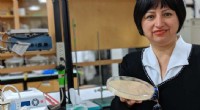
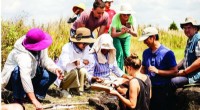
* Direct observation: Scientists use their senses to gather information about the world around them. This can be anything from watching animal behavior to examining rock formations.
* Indirect observation: Scientists use tools like microscopes, telescopes, and sensors to observe things that are too small, too far away, or too complex to see with the naked eye.
2. Experimentation:
* Controlled experiments: Scientists manipulate specific variables in a controlled environment to test a hypothesis. This helps them isolate the cause and effect of a phenomenon.
* Field experiments: Scientists conduct experiments in the natural world, where they can observe how organisms and ecosystems interact with their environment.
3. Analysis:
* Data analysis: Scientists use mathematical and statistical methods to analyze the data they collect. This helps them identify patterns, trends, and relationships.
* Modeling: Scientists create models (mathematical, computer, or physical) to represent and understand complex systems. This allows them to test hypotheses and make predictions.
Examples of scientific exploration:
* Biologists observe and study living organisms, including their behavior, physiology, and evolution.
* Chemists experiment with chemicals to understand their properties and reactions.
* Physicists study the fundamental laws of nature, such as gravity and electromagnetism.
* Geologists study the Earth's structure, composition, and processes, such as plate tectonics and volcanic eruptions.
* Astronomers observe and study celestial objects, such as stars, planets, and galaxies.
Key principles of scientific exploration:
* Empiricism: Relying on evidence from observations and experiments.
* Objectivity: Avoiding bias in data collection and analysis.
* Skepticism: Questioning assumptions and seeking evidence to support claims.
* Collaboration: Working together to share ideas and data.
* Communication: Clearly and effectively communicating findings to others.
Through these methods and principles, scientists continuously explore and deepen our understanding of the natural world, leading to new discoveries and technologies that benefit humanity.