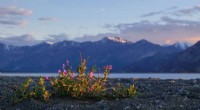
Mountain Range:
* Smaller in scale: A mountain range is a series of mountains that are geologically connected and formed by the same tectonic forces.
* Geographically focused: It's a relatively localized group of mountains, usually within a specific geographic area.
* Example: The Appalachian Mountains, the Sierra Nevada
Mountain System:
* Larger in scale: A mountain system encompasses multiple mountain ranges and is characterized by broader geological processes.
* More complex: It often involves several tectonic plates and different geological events.
* Example: The Rocky Mountains (which includes several ranges like the Front Range and the Wind River Range), the Himalayan system (which includes the Himalayas, Karakoram, and Hindu Kush).
In simple terms:
* Think of a mountain range as a "neighborhood" of mountains.
* A mountain system is like a "city" of mountains, made up of many different "neighborhoods" (mountain ranges).
Key Takeaway:
The difference mainly lies in scale and complexity. A mountain range is a smaller, localized group of mountains, while a mountain system is a larger, more complex geological structure that encompasses multiple ranges.