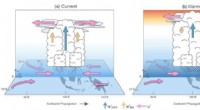
Climate forcing mechanisms are the factors that alter the Earth's energy balance, ultimately driving changes in climate. They can be either natural or human-induced, and they act by changing the amount of incoming solar radiation, outgoing infrared radiation, or both.
Here's a breakdown of key climate forcing mechanisms:
Natural Forcings:
* Solar Irradiance: The sun's energy output varies over time, impacting the amount of energy reaching Earth. This variability, though small, can influence long-term climate trends.
* Volcanic Eruptions: Large volcanic eruptions release ash and sulfur dioxide into the atmosphere, reflecting sunlight back into space and causing temporary cooling.
* Orbital Variations (Milankovitch Cycles): These are long-term changes in Earth's orbit around the sun, affecting the amount of solar radiation received at different latitudes. This contributes to ice ages and interglacial periods.
* Plate Tectonics: Over geological time, tectonic plate movements can alter ocean currents, landmass configurations, and volcanic activity, influencing climate patterns.
Anthropogenic (Human-Induced) Forcings:
* Greenhouse Gases: Burning fossil fuels, deforestation, and industrial processes release greenhouse gases like carbon dioxide, methane, and nitrous oxide. These gases trap heat in the atmosphere, causing global warming.
* Aerosols: Human activities release tiny particles, called aerosols, into the atmosphere. Some aerosols reflect sunlight, causing a cooling effect, while others absorb heat, contributing to warming.
* Land Use Change: Deforestation and urbanization alter the reflectivity of the Earth's surface, affecting the amount of solar radiation absorbed. This change can lead to both warming and cooling effects depending on the specific land use changes.
Understanding Climate Forcing:
* Positive Forcing: Leads to warming, such as increased greenhouse gas concentrations.
* Negative Forcing: Leads to cooling, such as increased volcanic aerosols.
* Magnitude and Duration: The strength and length of a forcing mechanism influence its overall impact on climate.
Importance of Climate Forcing:
* Predicting Future Climate: Understanding climate forcing mechanisms is crucial for predicting future climate change and its potential impacts.
* Designing Climate Mitigation Strategies: Identifying and quantifying forcing mechanisms helps us develop strategies to reduce greenhouse gas emissions and limit human influence on climate.
In Conclusion:
Climate forcing mechanisms are the driving forces behind climate change. They can be natural or human-induced, and they impact the energy balance of the Earth, leading to both warming and cooling effects. Understanding these mechanisms is critical for predicting future climate changes and developing strategies to mitigate their impacts.