1. Lack of Vascular Tissue:
* Unlike vascular plants (like ferns, trees, and flowers), mosses and liverworts lack specialized tissues for transporting water and nutrients. This limits their ability to grow tall and access resources efficiently.
* Without a vascular system, they rely on diffusion for water and nutrient transport, making them susceptible to desiccation (drying out) in drier environments.
2. Dependence on External Water:
* Both mosses and liverworts need external sources of water for reproduction and growth.
* They absorb water directly through their surfaces, making them highly susceptible to drought conditions.
* Their limited ability to transport water restricts them to moist, shaded environments.
3. Limited Structural Support:
* The lack of lignin in their cell walls means they lack the rigid structure needed to grow tall and support themselves against gravity.
* This limits their height and restricts them to habitats where they can cling to surfaces or grow in dense mats.
4. Dependence on Spores for Reproduction:
* Mosses and liverworts reproduce through spores, which are dispersed by wind. This restricts their ability to colonize distant areas compared to plants that reproduce through seeds, which can be dispersed by animals or wind over longer distances.
5. Specific Environmental Requirements:
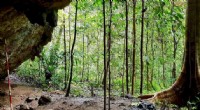
* They thrive in specific environmental conditions, such as cool, humid, and shady areas.
* This limits their distribution to regions with suitable climates and suitable substrate (like rocks, soil, or tree bark).
Overall, the combination of these factors significantly restricts the size and habitat of mosses and liverworts. Their adaptations for survival in moist, shady environments limit their ability to compete with vascular plants in drier and more exposed conditions.