1. Genetic Evidence:
* DNA Sequencing: Darwin couldn't directly observe genetic changes. Today, we can analyze DNA sequences and trace evolutionary relationships, identifying mutations and tracking their spread through populations. This allows us to directly see how natural selection favors advantageous genes.
* Molecular Clock: By comparing DNA sequences across species, we can estimate the time of divergence, offering a timeline for evolution.
* Genome-wide association studies (GWAS): These studies link specific genetic variations to traits, revealing the genetic basis of adaptation.
2. Direct Observation of Evolution:
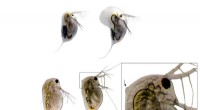
* Antibiotic Resistance: The rapid evolution of antibiotic resistance in bacteria is a real-time example of natural selection. We can see how resistant strains become dominant due to the selective pressure of antibiotics.
* Viral Evolution: The ongoing evolution of viruses like influenza and HIV is another example. New variants arise and spread due to natural selection, necessitating the development of new vaccines and treatments.
* Climate Change and Adaptation: We are witnessing how species are adapting to changing environments, for instance, changes in beak size in birds responding to climate-driven food sources.
3. Computational Modeling and Simulation:
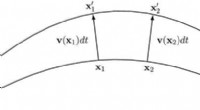
* Mathematical Models: Modern biologists use complex mathematical models to simulate evolutionary processes and predict the outcomes of natural selection.
* Computer Simulations: Powerful computers allow us to run simulations that mimic real-world scenarios, testing hypotheses and gaining insights into evolutionary dynamics.
4. Paleontological Evidence:
* Fossil Record: While Darwin had access to the fossil record, today we have a much richer understanding of the fossil record, with more complete lineages and transitional forms.
* Ancient DNA: We can now extract and analyze DNA from ancient remains, offering unprecedented insights into past evolutionary events.
5. Global Scale Observation:
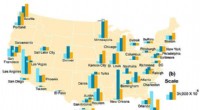
* Biodiversity Data: Today, we have vast databases of species information and distribution patterns, allowing us to study evolution at a global scale.
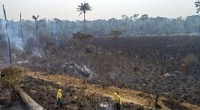
* Remote Sensing and Satellite Data: We can monitor changes in ecosystems and species populations from space, providing insights into how natural selection is driving evolution in response to environmental changes.
In conclusion, while Darwin's work was revolutionary, modern science has expanded our understanding of natural selection significantly. We now have the tools and data to directly observe, analyze, and model evolutionary processes in ways that were unimaginable in Darwin's time.