Technology and Innovation:
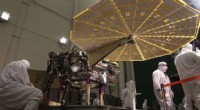
* Advancements in Materials and Manufacturing: The demands of space exploration spurred the development of incredibly durable and lightweight materials, high-performance computing, and advanced manufacturing techniques. These technologies have found their way into countless industries, from medicine and aerospace to consumer electronics and sports equipment.
* Satellite Technology: Communication satellites revolutionized global communication, enabling instantaneous communication across vast distances. They also play crucial roles in navigation, weather forecasting, and environmental monitoring.
* Medical Advancements: Space exploration has led to advancements in areas like telemedicine, radiation shielding, and understanding the human body's response to extreme conditions. These discoveries have direct applications in healthcare on Earth.
Scientific Understanding:
* Earth Observation: Satellites provide continuous data on Earth's climate, environment, and natural resources. This information is vital for understanding climate change, predicting natural disasters, and managing our planet's resources.
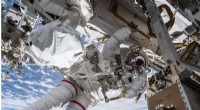
* Cosmic Perspective: Viewing Earth from space has profoundly changed our understanding of our planet's fragility and the interconnectedness of all life. This "overview effect" has influenced environmental awareness and the desire for global cooperation.
* Astrophysics and Cosmology: Space missions have enabled us to study distant galaxies, black holes, and the early universe, expanding our knowledge of the cosmos and our place within it.
Social and Cultural Impacts:
* Inspiration and Exploration: Space exploration has ignited the imaginations of generations, inspiring countless individuals to pursue careers in science, technology, engineering, and mathematics (STEM). It also fosters a spirit of adventure and a desire to explore the unknown.
* International Cooperation: Many space missions have involved international collaboration, highlighting the potential for global cooperation on complex challenges.
* Space Tourism: The emergence of space tourism offers the potential for a wider range of people to experience the awe-inspiring beauty of Earth from orbit, further promoting global understanding and appreciation.
Challenges and Considerations:
* Cost: Space exploration is extremely expensive. The economic and ethical implications of such large investments need careful consideration.
* Environmental Impacts: Space launches and debris can pose environmental risks. Sustainable space practices are essential to minimize these impacts.
* Space Law and Governance: As humanity ventures further into space, there is a need for international agreements and regulations to ensure responsible exploration and use of celestial bodies.
In conclusion, leaving Earth has had a profound and multifaceted impact on our world, driving technological advancements, expanding scientific understanding, inspiring generations, and challenging us to think about our planet and our place in the universe in new ways. The future of space exploration holds immense potential for continued innovation, discovery, and a deeper understanding of ourselves and our place in the cosmos.