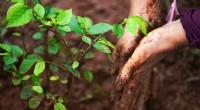
* Living Leaf: A living leaf is actively carrying out its functions like photosynthesis, respiration, and transpiration. It's made up of living cells.
* Senescence: As a leaf ages, it starts to senesce. This is a natural process where it breaks down its own components. Chlorophyll (the green pigment) degrades, causing the leaf to change color.
* Detachment: Eventually, the leaf detaches from the plant. At this point, it's no longer receiving nutrients or water.
* Decomposition: Bacteria, fungi, and other decomposers begin to break down the leaf's organic matter. This process releases nutrients back into the environment.
So, when does it become "non-living"?
There's no clear cut-off point. Once the leaf detaches, it's no longer functioning as a living part of the plant. However, the process of decomposition is still a biological process, and even in its decaying state, the leaf is still being acted upon by living organisms.
Think of it this way: It's more of a spectrum than a sharp line. As the leaf decomposes, it transitions from a living structure to a complex mix of organic material and eventually, to simpler compounds.