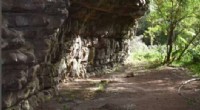
1. Creates Thin, Flat Sheets: The main characteristic of mechanical exfoliation is the production of thin, flat sheets of rock. This is often seen in granite or other igneous rocks that have large, well-defined crystals.
2. Causes of Exfoliation:
* Stress Release: When rocks are deeply buried under enormous pressure, they are compressed. As the overlying pressure is removed (e.g., due to erosion or uplift), the rock expands and can crack along planes of weakness.
* Temperature Changes: Extreme temperature fluctuations, like those seen in deserts, cause rocks to expand and contract. This repeated expansion and contraction can cause the rock to break along its weakest points.
* Freezing and Thawing: Water seeps into cracks and fissures in rocks. When the water freezes, it expands and puts pressure on the rock. Repeated freezing and thawing can pry the rock apart.
* Crystal Growth: Minerals within the rock can grow, putting pressure on the surrounding rock and causing it to break.
3. Examples of Exfoliation:
* Exfoliation Domes: Large, rounded rock formations with onion-like layers are known as exfoliation domes. These are formed by the gradual peeling away of rock layers.
* Sheet Joints: These are planar fractures that parallel the surface of the rock. They are a common result of mechanical exfoliation.
4. Impact on Landscapes:
* Landforms: Exfoliation plays a significant role in shaping landscapes, particularly in areas with high temperature variations or glacial activity. Exfoliation domes are notable landforms created by this process.
* Erosion: The thin sheets produced by exfoliation are more susceptible to erosion by wind and water. This can lead to the formation of valleys, canyons, and other landforms.
5. Importance in Geology:
* Studying Rock Structure: Exfoliation provides insights into the internal structure and past stresses of rocks.
* Understanding Erosion: It helps understand how rocks are broken down and eroded, shaping the Earth's surface.
In summary, mechanical exfoliation is a crucial process that breaks down rocks, creating distinctive landforms and impacting erosion patterns. It is an important factor in shaping the landscapes we see today.