Here's a breakdown of how it works:
* Water molecules are constantly moving: They are in a state of constant random motion, bumping into each other and anything else in their path.
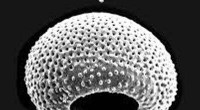
* Pollen grains are much larger: Compared to water molecules, pollen grains are relatively large.
* Collisions cause movement: When water molecules collide with pollen grains, they impart a small amount of energy, causing the pollen grains to jiggle and move in random directions.
Factors influencing pollen movement in water:
* Water temperature: Higher temperature means faster-moving water molecules, leading to more frequent collisions and greater pollen movement.
* Pollen size and shape: Larger pollen grains move slower than smaller ones. Irregular shapes can lead to more complex movement patterns.
* Water viscosity: Higher viscosity (thickness) slows down the water molecules, reducing the frequency of collisions and pollen movement.
Other factors that may contribute to pollen movement in water:
* Currents: Water currents can move pollen grains in a more directed manner.
* Gravity: Pollen grains will tend to sink to the bottom of the water due to gravity, unless they are buoyant.
Note: Brownian motion is a significant factor in the movement of pollen grains in water, particularly in still water. However, other forces like currents and gravity can also play a role.