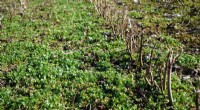
* Producer: Grass - The base of the food chain, making its own food through photosynthesis.
* Primary Consumer: Grasshopper - Eats the grass, transferring energy from the producer level.
* Secondary Consumer: Lizard - Eats the grasshopper, gaining energy from the primary consumer.
* Tertiary Consumer: Hawk - Eats the lizard, representing the top predator in this simplified chain.
Important Notes:
* Decomposers: Important to note that decomposers (like bacteria and fungi) are crucial for breaking down dead organisms and returning nutrients to the soil, making them available again for producers.
* Complex Interactions: Real grassland ecosystems are far more complex than this single chain. Multiple species exist at each level, and animals often eat from multiple levels.
* Energy Loss: Remember that energy is lost at each level of a food chain. Only about 10% of the energy from one level is transferred to the next.
This simple example demonstrates the basic concept of energy flow within a grassland ecosystem.