Here's why:
* Primary succession occurs in a completely barren environment, like a newly formed volcanic island or a glacier retreat, where no soil exists.
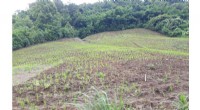
* Secondary succession occurs in an area where the existing community has been disturbed, but the soil remains intact. This is the case after a forest fire, which clears out the existing vegetation but leaves the soil relatively undisturbed.
The process of secondary succession after a forest fire:
1. Pioneer species such as grasses and wildflowers quickly colonize the area. These plants are adapted to harsh conditions and can tolerate full sunlight and low nutrient levels.
2. Early successional species like shrubs and small trees start to emerge as soil conditions improve. They provide shade and contribute to further soil development.
3. Mid-successional species such as larger trees continue to grow and create a more complex ecosystem with diverse plant and animal life.
4. Climax community is the final stage of succession where a stable, mature ecosystem develops, characterized by a variety of species and a balance between growth and decay.
It's important to note that:
* The exact species present in each stage of succession can vary depending on the location, climate, and other factors.
* The time it takes for an ecosystem to recover from a fire can vary greatly. Some forests may take decades, while others may recover in a few years.
* Fire is a natural part of many ecosystems and plays an important role in shaping the plant and animal communities.
So, while a forest fire can be devastating in the short term, it also provides an opportunity for the ecosystem to regenerate and adapt to new conditions through the process of secondary succession.