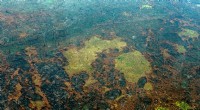
Wind Erosion
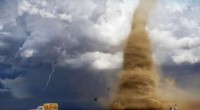
* Mechanism: Wind carries particles, primarily sand and silt, through a process called abrasion. This happens when windblown particles collide with other surfaces, chipping away at them. Wind also lifts smaller particles like dust and clay through suspension.
* Conditions:
* Dry climate: Wind erosion is most prominent in arid and semi-arid regions where vegetation is sparse, leaving soil exposed.
* Strong winds: High wind speeds are necessary to lift and transport particles.
* Loose soil: Soil that is dry, fine-grained, and lacks aggregation is more susceptible to wind erosion.
* Impact:
* Dust storms: Large amounts of dust can be transported long distances, impacting air quality and visibility.
* Soil loss: Leads to loss of fertile topsoil, affecting agricultural productivity.
* Desertification: Wind erosion contributes to the expansion of deserts.
Water Erosion
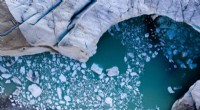
* Mechanism: Water, whether in the form of rain, rivers, or waves, carries away soil and rock through hydraulic action and abrasion. Hydraulic action is the force of water pushing against and breaking up rock, while abrasion occurs when sediment carried by the water scrapes against surfaces.
* Conditions:
* Precipitation: Rainfall intensity and frequency play a key role in water erosion.
* Slope: Steeper slopes experience greater erosion due to increased gravitational force.
* Vegetation cover: Vegetation helps bind soil, reducing water erosion.
* Impact:
* Gullies and ravines: Deep channels form in the soil, altering the landscape.
* Sedimentation: Erosion causes deposition of sediment in rivers, lakes, and oceans, affecting aquatic ecosystems.
* Flooding: Increased erosion can reduce the capacity of waterways, contributing to floods.
Key Differences:
* Particle size: Wind primarily erodes smaller particles like sand, silt, and dust, while water can carry much larger particles.
* Transport distance: Wind can carry particles much farther than water.
* Impact on landscape: Wind erosion creates more gradual changes, while water erosion creates more dramatic features like gullies and canyons.
* Conditions: Wind erosion is dominant in arid regions, while water erosion is prevalent in areas with significant rainfall.
Both wind and water erosion are significant environmental issues that need to be addressed through land management practices and conservation efforts.