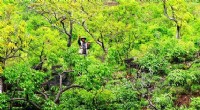
Layers of the Rainforest Canopy:
* Emergent Layer: The tallest trees, reaching up to 200 feet, with crowns that stick out above the canopy, like giants reaching for the sun. These trees are often wind-resistant and have buttress roots for stability. Examples include kapok trees and some fig species.
* Canopy Layer: The densest layer, forming a continuous roof of leaves. It's home to a huge variety of plant life, including epiphytes (plants that grow on other plants), vines, and orchids.
* Understory Layer: This layer receives less sunlight, consisting of shade-tolerant plants, ferns, shrubs, and young trees.
* Forest Floor: The darkest and least explored layer, characterized by decomposing organic matter, fungi, and some herbaceous plants.
Types of Plants:
* Trees: Diverse and abundant, with examples including mahogany, teak, rubber trees, and towering palm trees.
* Epiphytes: Plants that grow on other plants, using them for support but not obtaining nutrients from them. Common examples include orchids, bromeliads, and ferns.
* Vines: Climbing plants that use trees for support, often reaching high into the canopy. Some vines are woody, while others are herbaceous.
* Herbs: Small, non-woody plants found in the understory and on the forest floor. They are often adapted to low light conditions.
* Ferns: A diverse group of ancient plants, found in various layers of the rainforest, from the forest floor to the canopy.
* Mosses and Liverworts: These non-vascular plants often thrive in humid environments and are found on the forest floor, rocks, and tree trunks.
Adaptations:
Rainforest plants have evolved unique adaptations to thrive in their challenging environment:
* Large, broad leaves: Catch maximum sunlight in the shaded understory.
* Drip tips: Help shed excess water to prevent fungal growth.
* Buttress roots: Provide stability in shallow soils.
* Epiphytic adaptations: Allow plants to access nutrients from the air and rain.
* Vines and climbers: Reach for sunlight in the canopy.
Overall, the vegetation of tropical rainforests is incredibly diverse and complex, playing a crucial role in supporting a vast array of life.