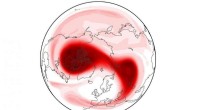
1. Temperature Regulation:
* Heat Storage and Distribution: Oceans absorb a vast amount of solar radiation, acting as a massive heat sink. This absorbed heat is then slowly released back into the atmosphere, moderating temperatures in coastal regions and influencing global climate patterns.
* Equatorial Heat Transport: Warm surface currents transport heat from the tropics towards the poles, distributing energy around the globe and influencing temperature gradients.
2. Precipitation and Cloud Formation:
* Evaporation and Moisture Supply: Oceans provide a massive source of water vapor through evaporation. This moisture is transported by winds and condenses to form clouds, leading to precipitation over landmasses.
* Convection and Storms: The interaction between warm, moist air rising from the ocean surface and cooler air aloft can create thunderstorms and other weather phenomena.
3. Wind Patterns:
* Sea Breeze and Land Breeze: The temperature difference between land and water creates onshore (sea breeze) and offshore (land breeze) winds. These local winds play a role in coastal weather patterns.
* Global Wind Patterns: The temperature difference between the tropics and poles drives large-scale atmospheric circulation patterns, such as trade winds and jet streams, which are significantly influenced by ocean currents.
4. El Niño-Southern Oscillation (ENSO):
* Ocean-Atmosphere Interactions: The El Niño-Southern Oscillation (ENSO) is a climate pattern characterized by alternating warm (El Niño) and cold (La Niña) phases in the central and eastern Pacific Ocean. These phases dramatically impact global weather patterns, influencing rainfall, temperature, and storm activity.
5. Carbon Dioxide Absorption:
* Climate Regulation: Oceans absorb a significant portion of atmospheric carbon dioxide, acting as a carbon sink and playing a critical role in regulating global climate.
In summary, oceans are essential for weather patterns due to their role in:
* Regulating global temperatures
* Providing moisture for precipitation
* Driving wind patterns
* Influencing large-scale climate events
* Absorbing carbon dioxide
Understanding the complex interactions between the ocean and atmosphere is crucial for predicting and adapting to future climate changes.