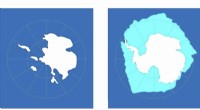
Polar zones are located near the planet's poles and include the continent of Antarctica in the south and Northern Canada, Alaska, Siberia, Greenland and the arctic ice caps in the north. Polar zones are some of the most inhospitable regions on Earth.
The two types of climates in the polar zone are tundra and ice cap. Temperatures in the tundra can rise above freezing, but not in the ice cap climate.
Polar zones have a constant terrain of snow and ice combined with dry air. No trees exist in the polar zone; the area receives very little precipitation. The South Pole is subjected to strong winds.
The polar zones experience periods of 24 hours of perpetual sunlight during summer months and 24 hours of perpetual darkness in winter months.
The south polar zone is home to emperor penguins and a few scattered researchers. The North Pole has small plants, caribou and polar bears. Tribes of indigenous people, including the Inuit, inhabit the north polar zone.
The coldest temperature ever recorded on Earth was -88 degrees C (-126 degrees F) in Antarctica.