1. Seismic Waves:
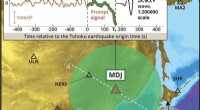
* Earthquakes: Earthquakes generate seismic waves that travel through the Earth. These waves behave differently depending on the material they pass through.
* Seismology: By analyzing how seismic waves travel (speed, path, reflection, etc.), scientists can map out the Earth's layers and their composition. This is similar to how doctors use ultrasound to see inside the human body.
2. Gravity and Magnetic Fields:
* Gravity Measurements: Variations in Earth's gravitational field can indicate differences in density beneath the surface. Heavier materials like iron in the core exert stronger gravitational pull.
* Magnetic Field: The Earth's magnetic field is generated by the movement of molten iron in the outer core. By studying the magnetic field's strength and variations, we can learn about the core's properties and activity.
3. Volcanoes and Geothermal Activity:
* Volcanic Eruptions: Erupting volcanoes bring up materials from deep within the Earth, providing direct samples of the mantle and sometimes even the lower crust.
* Geothermal Heat Flow: The heat flow from the Earth's interior can be measured at the surface. This information helps us understand the processes happening deep within the Earth, including the flow of heat from the core.
4. Meteorites:
* Iron Meteorites: These are thought to be remnants of the cores of early planets that were destroyed during the formation of our solar system. Studying their composition provides insights into the likely composition of Earth's core.
5. Laboratory Experiments:
* High-Pressure Experiments: Scientists use high-pressure laboratory equipment to simulate the conditions found deep within the Earth. This helps them study how different materials behave under extreme pressure and temperature, providing insights into the structure and composition of the Earth's interior.
6. Computer Modeling:
* Numerical Simulations: Scientists use computer models to integrate data from various sources and create simulations of Earth's interior. These models allow them to test different hypotheses about the processes happening within the Earth and refine our understanding of its internal structure.
These methods, combined with each other, paint a picture of our planet's interior, revealing its hidden layers and the dynamic processes taking place deep beneath the surface.