1. Defining the Question:
- What are you trying to learn? A specific question or hypothesis guides your observation. For example, "Does sunlight affect plant growth?"
2. Choosing Methods:
- Direct Observation: Using your senses (sight, touch, smell, hearing, taste) to gather information directly.
- Indirect Observation: Using instruments or tools to extend your senses. This includes microscopes, telescopes, thermometers, pH meters, and more.
- Data Collection: Recording observations systematically, often using tables, graphs, or notes. This ensures accuracy and allows for comparisons.
3. Recording Observations:
- Qualitative Observations: Describing what you see, hear, smell, or feel using words (e.g., "The plant is green," "The solution smells like vinegar").
- Quantitative Observations: Measuring and recording numerical data (e.g., "The plant grew 5 cm taller," "The temperature is 25°C").
4. Analyzing Observations:
- Interpretation: Examining your data to draw conclusions and identify patterns.
- Verification: Repeating experiments to ensure your observations are consistent and reliable.
Important Considerations:
* Objectivity: Strive to be unbiased and avoid letting personal beliefs influence your observations.
* Precision: Use accurate measurements and tools to ensure your observations are reliable.
* Control Variables: If you're conducting an experiment, control all variables except the one you're testing to isolate its effect.
Examples of Scientific Observations:
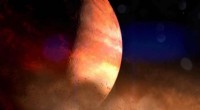
* Astronomy: Observing stars and planets through telescopes to understand their properties and movements.
* Biology: Using microscopes to observe the structure of cells and tissues.
* Chemistry: Performing experiments to observe chemical reactions and their products.
* Physics: Measuring the speed of light or the acceleration of gravity through experiments.
Science is a process of ongoing observation, analysis, and refinement. As new tools and technologies develop, we can observe the world in greater detail and with greater precision.