* Natural Science Aspects:
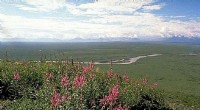
* Physical Geography: Studies the Earth's physical systems like climate, landforms, soils, vegetation, and water. This involves principles from geology, meteorology, climatology, and ecology.
* Environmental Geography: Focuses on the interactions between humans and the natural environment, drawing upon fields like biology, chemistry, and physics.
* Social Science Aspects:
* Human Geography: Studies human populations, societies, cultures, and their relationships with the environment. This uses concepts from sociology, anthropology, economics, and political science.
* Cultural Geography: Examines the spatial patterns of cultures, religions, languages, and traditions, drawing on insights from history and archaeology.
Why is it a bridge discipline?
Geography is unique because it studies the interrelationships between human and natural systems. It considers both the physical environment and the human element to understand how they influence each other. This interdisciplinary nature makes it a valuable field for studying complex issues like climate change, urbanization, and resource management.
In conclusion, geography is not solely a natural science or social science. It integrates aspects of both to provide a holistic understanding of the Earth and its inhabitants.