Here's a breakdown:
Key Characteristics:
* Organized Thunderstorms: The thunderstorms in a tropical disturbance are not randomly scattered but show some level of organization, often forming a line or a cluster.
* Weak Circulation: The disturbance may have a very weak low-level circulation, meaning the air is rotating but not strongly enough to create a closed system.
* No Defined Center: Unlike a tropical depression or storm, a tropical disturbance doesn't have a well-defined center or a closed low-pressure system.
* Wind Speeds: Wind speeds within a disturbance are generally below 38 mph (62 km/h).
Development:
* Tropical disturbances can develop into tropical depressions, storms, and even hurricanes, but many dissipate without reaching these stages.
* The development depends on factors like the presence of warm ocean water, low wind shear, and other atmospheric conditions.
Impact:
* Tropical disturbances can bring heavy rain, strong winds, and rough seas, potentially causing minor flooding and localized damage.
* They are monitored closely by meteorologists as they can quickly develop into stronger systems.
Monitoring:
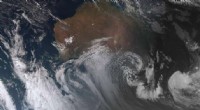
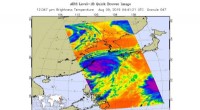
* Tropical disturbances are typically tracked and monitored by weather agencies using satellite imagery, radar, and other meteorological tools.
* Forecasters use these data to assess the potential for development and issue warnings if necessary.
In essence, a tropical disturbance is a potential precursor to a more intense tropical cyclone, but it's not a cyclone itself.