Rainforests:
* Tall, emergent trees: These giants tower above the rainforest canopy, reaching up to 80 meters high. Examples include mahogany, teak, and rubber trees.
* Canopy trees: The main layer of the rainforest, these trees form a dense, leafy cover. They include species like fig trees, palms, and orchids.
* Understory trees: Growing in the shade of the canopy, these trees are often smaller and adapted to low light conditions. Examples include ferns, bamboo, and lianas (vines).
* Epiphytes: These plants grow on other plants, such as trees, for support, not nourishment. Examples include orchids, bromeliads, and mosses.
* Vines: Climbing plants that use other trees for support, often reaching high into the canopy. Examples include lianas, passionflowers, and strangler figs.
Wetlands:
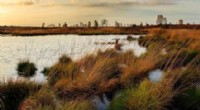
* Marsh grasses: These grasses are adapted to living in saturated soil, like cattails, reeds, and sedges.
* Aquatic plants: Plants that live in the water, such as water lilies, lotus, and water hyacinths.
* Trees: Certain trees, like cypress and mangrove, tolerate wet conditions and can grow in swampy areas.
* Mosses and ferns: These plants thrive in moist environments and often carpet the forest floor.
Other adaptations:
* Large leaves: Many rainforest plants have broad leaves to maximize sunlight absorption.
* Drip tips: Leaves of many rainforest plants have pointed tips to help shed excess water.
* Shallow root systems: Plants in wetlands have shallow root systems to access oxygen in the waterlogged soil.
* Air roots: Some plants, like mangroves, have specialized roots that grow above the waterline to take in oxygen.
These are just a few examples of the many plants that thrive in places with abundant rainfall and water. The exact species will vary depending on the specific location and climate.