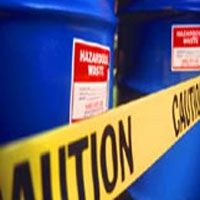
When a North Carolina hazardous-waste facility that stores and disposes of dangerous substances exploded on October 5, 2006, residents of a Raleigh suburb heard knocks on their doors in the middle of the night. Half the town had to evacuate: A chemical fire is serious business. The treatment, storage and disposal of hazardous waste is heavily regulated by the Environmental Protection Agency (EPA) to prevent just such an occurrence (among other terrible results of mishandling hazardous waste). According to a CNN.com article, this particular plant had been fined in the past for several safety violations that included storing "incompatible" waste in close proximity and not properly marking containers with their contents. So exactly how are facilities supposed to store hazardous waste to avoid disasters?
Before we get into storage methods, let's define "hazardous waste." The EPA defines it as "waste with properties that make it dangerous or potentially harmful to human health or the environment." Anything that is flammable, corrosive, unstable (may react violently when heated, compressed or brought into contact with water) and/or poisonous probably falls under the "hazardous" heading. This includes everything from dry-cleaning solvents, pesticide-manufacturing byproducts, explosives, lead-based paints, battery acid and even certain household cleaning products, for starters. All producers of hazardous waste (which includes you, once you open a bottle of that de-greaser you bought at the hardware store) have to follow proper procedures when transporting that waste to a treatment, storage and disposal facility like the one that blew up on October 5.
Once that waste reaches the facility, it is placed in temporary storage. A plant stores hazardous material in one of several structures, including:
During storage, any failures in proper containment can be disastrous. An improperly sealed container or building can leak toxic gases -- gases that could not only contaminate the air and make people sick, but could also infiltrate another storage container or come into contact with a surface impoundment or waste pile and react with another substance, causing an explosion. This is why incompatible wastes -- wastes that will undergo a chemical reaction if they come into contact with one another -- must be stored far enough apart to make contact unlikely or impossible. Regulations also state that every storage structure must be clearly marked with the substance it contains in order to avoid mix-ups in placement, treatment and handling and to avoid delays in determining what exactly has escaped into the air or ground if an accident does occur.
Storage at a hazardous-waste plant is always temporary. Once the plant treats the waste (which happens during or after storage) to make it less hazardous and/or smaller in volume, it transports it to a disposal facility, which may be a protected landfill, an underground injection well or a surface enclosure designed to handle hazardous materials.
For more information on hazardous-waste storage and related topics, check out the following links: