In fashion circles, critics talk about brown being the new black, knee length being the new mini and organic cotton being the new leather. In more scientific circles (and as a growing body of evidence indicates), people are talking about autumn becoming the new spring.
Global warming, an increase in the Earth's temperatures due to human activity, has been blamed for a number of things, from the decline in polar bear populations to a shorter ski season. Other recent evidence links the rise in world temperatures to deadlier storms and disappearing species, which might make the effect of global warming on autumn seem trivial by comparison.
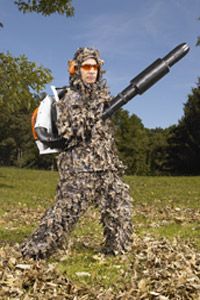
Nevertheless, for those of us who relish nature's changing of the guard, the disappearance of autumn would be devastating. The only upside might be the associated disappearance of those annoying leaf blowers. As far as science is concerned, the question is no longer if global warming will affect autumn, but how.
Seasons already vary widely around the world due to the different angles of the Earth relative to the sun. The theories of how global warming will impact future weather patterns and climate are just as varied. Some research suggests the Amazon rainforest could become a desert within the century, while other models forecast an impending ice age [source: Lean and Pearce, Pearce].
While it's certain that climate change is happening, what's not for sure is how that climate change will look in places like the western United States versus the northern Himalayas. Although this article can't possibly address all the possible scenarios for how global warming will affect autumn, it can at least pinpoint a few of the repercussions that are most likely to happen -- or in some cases, already happening.
If the autumn season is one of your favorites, brace yourself. Getting used to autumn's changes may require more than simply buying a longer khaki skirt.
 In coming autumns, you may find yourself raking flowers instead of fallen leaves.
Gavin Hellier/Robert Harding World Imagery/Getty Images
In coming autumns, you may find yourself raking flowers instead of fallen leaves.
Gavin Hellier/Robert Harding World Imagery/Getty ImagesYou may not pay much attention to the seasons beyond how they affect your closet. But even if you haven't noticed much difference in the fall season from year to year -- other than trendy fabrics and hem lengths -- scientists certainly have.
The primary difference scientists have observed is that it's getting warmer. Autumn temperatures in northern latitudes have risen 1.1 degrees Celsius (2 degrees Fahrenheit) in the past two decades [source: ScienceDaily]. In the Netherlands, scientists recorded a mean autumn temperature of 3.4 degrees Celsius (38.1 degrees Fahrenheit) above the long-term average in 2006 -- it was the highest temperature ever recorded [source: Wageningen University].
These abnormally high temperatures could mean only one thing: a shorter fall and winter. A number of studies indicate that in many areas, leaves are returning sooner than they ever have historically. In parts of Europe and Asia, spring has been arriving about a week earlier than usual for the last two decades [source: ScienceDaily]. Elsewhere, the flowering season for some plant species began an entire month early.
Not only are leaves returning sooner, they're also falling later. But unlike the return of leaves, which is directly linked to increased temperatures, scientists suggest the delay in leaf fall is tied instead to rising levels of atmospheric carbon dioxide. Trees exposed to elevated levels of this greenhouse gas stay green longer since they use it to produce sugars through photosynthesis. Over the past 30 years in Europe, atmospheric CO2 has risen by 13.5 percent, causing a delay in leaf fall of 1.3 to 1.8 days each decade [source: ScienceDaily].
While this may seem like good news -- plants are being more productive, after all -- it's also worrisome, because they need to set buds in order to prepare for the coming seasons. If they wait too long, plant life will be vulnerable to frost and other weather events.
The correlate of a shorter autumn is a longer growing season. The 2006 Netherlands study found 440 plant species flowering in December, when normally, the number of flowering plants is only 2 percent of that amount [source: Wageningen University]. In parts of Europe and Asia, the growing season is now 18 days longer; in North America, the season has lengthened by 12 days [source: ScienceDaily].
The downside of higher temperatures is that it could spell trouble for those fall vacationers who look forward to a show of color this time of year. This is because the changing colors -- and their intensity -- rely on the early fall weather. Of critical importance are the cool nights: without them, the leaves simply continue about their business producing chlorophyll and photosynthesizing. As long as high temperatures persist, the chlorophyll doesn't go away to reveal the underlying red and orange colors characteristic of autumn. Global warming would also affect autumn color if it brought cold and rainy weather, severe drought or early frost to the fall season. Read Why do leaves turn red, in particular? to better understand why leaves change color.
Of course, as we mentioned earlier, not all parts of the world will respond to global warming in the same way -- autumn in northern Europe may get shorter, while Costa Rica may see a fall season it previously never really had. Climate change works in mysterious ways, so cherish whatever autumn brings this year -- you may never see another quite like it.
ScienceGreen ScienceHow Global Warming WorksScienceGreen ScienceIs global warming irreversible?ScienceGreen ScienceWhat would it take to reverse global warming?ScienceGreen ScienceHow will global warming affect autumn?ScienceGreen ScienceIs global warming destroying Mount Everest?ScienceGreen ScienceHow does global warming affect hunting season?ScienceGreen ScienceWhat does global warming have to do with the decline in the polaScienceGreen ScienceWhat will global warming do to the wine industry?ScienceNatural DisastersDid global warming cause Hurricane Sandy?ScienceGreen ScienceHow can adding iron to the oceans slow global warming?ScienceGreen Science10 Things That Donât Disprove Global WarmingScienceGreen ScienceWhat's the Difference Between Global Warming and Climate Change?ScienceGeophysicsCould Injecting Particles Into the Stratosphere Slow Global Warming?ScienceGreen ScienceCould reversing global warming start an ice age?ScienceGreen ScienceWhat Can I Do About Global Warming?ScienceGreen ScienceCould military strategy win the war on global warming?ScienceGreen ScienceHow Carbon Offsets WorkScienceGreen ScienceHow Carbon Tax WorksScienceGreen ScienceHow Carbon Footprints WorkHomeGarden DesignIf I plant trees in my yard, will it offset global warming?EntertainmentOlympicsHow Is Global Warming Affecting the Winter Olympics?Sources