In December of 1942, an experiment that would change the world was taking place at the University of Chicago. After years of research and a month of construction, the world's first nuclear reactor, Chicago Pile-1, was ready for testing.
Constructed of a lattice of graphite blocks full of uranium oxide and uranium metal that were stacked 57 layers high, Chicago Pile-1 bore little resemblance to today's nuclear reactors [source: Alfred]. A three-person "suicide squad" was waiting to step in and shut the reactor down in case the reactor's safety features failed. Fortunately, the more than 50 people in attendance that day were able to share a collective sigh of relief -- as the squad was not needed [source: Alfred]. The reactor worked without a hitch, and the nuclear era was born.
In 2011, more than 440 nuclear power plants in 30 countries across the globe were busy supplying 14 percent of the world's current electricity needs [source: World Nuclear Association]. Nuclear power certainly has its pros and cons, but no one can deny its importance.
Now that we know a little about how far nuclear power has come over the past 70 years, let's visit the top 10 nuclear power plants on Earth. We've rated them by the collective net capacity of the facility, but as you'll see, power capacity doesn't always equate to the greatest energy output.
Contents
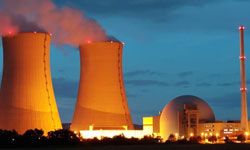
In 2011, more than 440 nuclear power plants were located in 30 countries across the globe. See more nuclear power pictures.
Thomas Starke/Getty ImagesIn December of 1942, an experiment that would change the world was taking place at the University of Chicago. After years of research and a month of construction, the world's first nuclear reactor, Chicago Pile-1, was ready for testing.
Constructed of a lattice of graphite blocks full of uranium oxide and uranium metal that were stacked 57 layers high, Chicago Pile-1 bore little resemblance to today's nuclear reactors [source: Alfred]. A three-person "suicide squad" was waiting to step in and shut the reactor down in case the reactor's safety features failed. Fortunately, the more than 50 people in attendance that day were able to share a collective sigh of relief -- as the squad was not needed [source: Alfred]. The reactor worked without a hitch, and the nuclear era was born.
In 2011, more than 440 nuclear power plants in 30 countries across the globe were busy supplying 14 percent of the world's current electricity needs [source: World Nuclear Association]. Nuclear power certainly has its pros and cons, but no one can deny its importance.
Now that we know a little about how far nuclear power has come over the past 70 years, let's visit the top 10 nuclear power plants on Earth. We've rated them by the collective net capacity of the facility, but as you'll see, power capacity doesn't always equate to the greatest energy output.
Located 220 miles (350 kilometers) west of Tokyo, the Ohi power plant comes a close second to Fukushima Daini in churning out electricity for Japan. The facility generated 27,298.28 gigawatt-hours of energy in 2010 -- that would have been enough to provide all the homes in Maryland electricity in 2009 [sources: IAEA PRIS, KU Institute for Policy & Social Research].
Although the earthquake of March 2011 didn't directly affect the Ohi power station, Unit 3 has been offline since the disaster struck. In the aftermath of the quake, the Japanese government ordered all 35 nuclear reactors that had been shut down for regular safety inspections to remain offline until they completed a two-step stress test.
The test is designed to determine a reactor's ability to withstand large earthquakes and tsunamis. In October 2011, Ohi Unit 3 passed the first phase. Step two is a comprehensive stress test similar to those that have been proposed by the European Union. The test results will be sent to Japan's Nuclear and Industrial Safety Agency (NISA) and Nuclear Safety Commission (NSC) before an additional panel of government officials will decide whether Ohi 3 can resume operating. All of the reactors that were stopped after the quake will go through this process. As you can imagine, it will take time to get Japan's nuclear power stations back to full capacity.
Japan's Electricity Supply CrisisAccording to the Japan Atomic Industry Forum, only 10 of Japan's 54 power reactors were operating as of Oct. 15, 2011. This portion represents roughly 18 percent of the country's total nuclear generating capacity. Thirty-one units weren't operating due to periodic inspections.
With 75 percent of its electricity from nuclear energy, France is tres serious about nuclear power. It's not surprising then that three nuclear power plants on this list are located on French soil. Cattenom, whose four reactors sit on a site in Normandy bordering Germany and Luxembourg, is the third largest power plant in France in terms of net capacity. In 2010, it delivered 34,989.313 gigawatt-hours to the grid, enough to meet the electricity needs for the entire state of Nevada [source: IAEA PRIS, KU Institute for Policy & Social Research].
Cattenom's location has created some uneasiness among its neighbors, however. Its close proximity to Luxembourg, a country that has no nuclear facilities, makes Luxembourg's health and policy experts particularly vigilant regarding nuclear reactor safety. A nuclear accident at its doorstep isn't something Luxembourg would like to see happen in the future. Although reactors at the facility underwent and passed a recent stress test, the Luxembourg health ministry remained unconvinced that Cattenom does not pose a significant safety risk. These concerns precipitated further investigation and review by French authorities and organizations with expertise on reactors and industrial sites. As a result, in November 2011, it was recommended that additional safety measures be implemented at the Cattenom facility.
A River Runs Through ItForty-four of France's 59 nuclear power plants are inland, which means they depend on nearby rivers rather than the sea for water to cool their reactors. Droughts that drain those rivers are a serious concern in France. The water shortages resulting from drought can potentially compromise reactor cooling at the majority of its nuclear complexes.
 It's business as usual at this French nuclear facility as Tour de France riders whiz past on July 12, 2003.
Robert Laberge/Getty Images
It's business as usual at this French nuclear facility as Tour de France riders whiz past on July 12, 2003.
Robert Laberge/Getty ImagesPaluel's four reactors are situated in the Seine-Maritime County of Normandy, a region that prides itself in generating around 11 percent of France's electricity [source: Seine-Maritime Economic Development Agency]. Paluel alone contributed 6 percent of the country's electricity in 2010 [source: IAEA PRIS]. The four reactors at Paluel have been pumping out power since the early to mid-1980s and have produced a cumulative 847,053 gigawatt-hours of energy over their lives-- more than the amount of electricity the country of Germany used in 2008 [sources: IAEA PRIS, The World Bank].
Paluel generates more than electricity, however. The power plant has made a significant economic impact in the region; contracts between Paluel and local businesses amounted to more than $64.6 million in 2005 [source: Seine-Maritime Economic Development Agency]. What's more, the Paluel and Penly nuclear power plants are actively involved in agricultural recycling experiments in the Seine-Maritime County. For example, since 2003, sludge from the wastewater treatment plants at Paluel has been used to generate compost for reed beds and Penly provides algae to companies who use it for recycling into fertilizer.
Next up is Europe's second largest nuclear power plant, and it celebrated a historic milestone recently.
Gravelines nuclear power plant cemented its place in history on Aug. 27, 2010, when it delivered its 1,000 billionth kilowatt-hour of electricity. Until then, no other nuclear power site had generated that much -- the figure is twice the amount of electricity consumed annually in the whole of France [source: World Nuclear News].
The French facility isn't the biggest or oldest power plant in the world. How, then, does it manage to consistently churn out power in order to reach the historic milestone before its contemporaries? Gravelines says it owes it success to efficient facility operation and maintenance, standardization procedures and a highly skilled staff. Efficiency like this doesn't just generate more power, however. In more than 30 years of operation, Gravelines has never had a significant safety incident.
The power plant has made a big impact on the local community as well. In three decades of operation, the facility has contributed more than $11 billion in workers' wages and taxes [source: World Nuclear News]. Each of the six reactors at Gravelines is expected to be in operation for another 30 years. If things keep going the way they are, there's no reason to doubt that it will deliver its next 1,000 billionth kilowatt-hour before retiring.
Graveline's Nuclear Output: More than a MilestoneOne thousand billion kilowatt-hours equals one petawatt hour, which is approximately the amount of electricity generated from burning 386 million tons (350 million metric tons) of coal or 243 million tons (220 million metric tons) of oil. Had coal been used to generate the electricity produced by Gravelines, 1,100 million tons (1,000 million metric tons) of carbon dioxide would have been emitted into the atmosphere.
About one-half of Ukraine's electricity comes from its 15 nuclear reactors [source: World Nuclear Association]. It's second only to France in the amount of electricity it generates from nuclear power. When Unit 6 was connected to the grid in 1995, Zaporozhe became the largest nuclear power station in Europe. The Zaporozhe power plant generates a whopping 47 percent of the Ukraine's nuclear power, supplying 22 percent of the total energy for that country [source: IAEA PRIS]. The power plant produced enough energy in 2010 to meet New York City's electricity needs for three years [source: Solar One].
Most of the reactors at Zaporozhe are likely to remain operational until 2030-2034, which means the power station should be a major contributor to Ukraine's nuclear power needs for decades. Within that time, Ukraine plans to double its existing nuclear power capacity by building 15 new reactors with a combined net capacity of 14,000 megawatts, emphasizing the country's commitment to nuclear power [source: World Nuclear Association].
The next two reactors on the list provide close to 80 percent of the nuclear power for a country that is only just beginning its love affair with nuclear energy.
A Famous Closure for a New Nuclear MillenniumThe best-known nuclear power station in Ukraine was Chernobyl. Unit 4 was destroyed in the accident of 1986, and Unit 2 was shut down after a fire in the turbine hall occurred in 1991. Following international pressure, Ukraine shut down Units 1 and 3 in 1997 and 2000, respectively.
South Korea gets 32 percent of its electricity from nuclear power -- close to 79 percent of it is generated at Ulchin and Yonggwang (next on our list). But don't be surprised if that statistic changes in the next 10 years. South Korea plans to increase its nuclear energy capacity by 56 percent by 2020. This means more reactors cranking out more power. To say that nuclear power is a strategic priority in South Korea is an understatement.
South Korean power reactors have some of the world's highest capacity factors, averaging 96.5 percent in recent years [source: World Nuclear Association]. This means that, on average, South Korea's reactors operate extremely close to their full capacity, producing 96.5 percent of their potential output over a given period of time. What's responsible for that efficiency? In part, Korean Standard Nuclear Plant (KSNP) design. KSNP is a series of standardization steps that's been developed over the years to optimize nuclear reactor performance and safety. Units 3 and 4 at Ulchin power plant were the first KSNP reactors to be built. During its first cycle of operation, Ulchin's Unit 3 achieved a 103 percent capacity factor and a 100 percent availability factor [source: Power Technology]. That's impressive stuff. By comparison, the reactors at the Gravelines facility, known for its efficient power production, have an average capacity factor of around 88 percent.
On its own, the Ulchin power station generates nearly 34 percent of South Korea's nuclear power, and in 2010 the plant produced enough energy to light up the entire state of Oregon for a year [source: KU Institute for Policy & Social Research].
A Nuclear Economic Business StrategySouth Korea is poised to be a major world provider of nuclear energy. It recently sold four modern nuclear power reactors to the United Arab Emirates (UAE) for $20 billion and is aiming to export 80 reactors by 2030. It also plans to enter the $78 billion market for operating, maintaining and repairing nuclear reactors for customers worldwide.
 A South Korean nuclear scientist tests a partly dismantled experimental reactor for radiation at Korea Atomic Energy Research Institute, on Sept. 10, 2004, in Seoul.
Chung Sung-Jun/Getty Images
A South Korean nuclear scientist tests a partly dismantled experimental reactor for radiation at Korea Atomic Energy Research Institute, on Sept. 10, 2004, in Seoul.
Chung Sung-Jun/Getty ImagesYonggwang may be the silver medalist in terms of total net capacity, but for energy output it gets gold. The 48,386.218 gigawatt-hours of energy delivered by the power station in 2010 could meet the annual electricity consumption of Hong Kong and Alaska combined [source: World Bank, KU Institute for Policy & Social Research].
Units 3 and 4, which were completed in 1993 and 1994, respectively, are among the top 10 performers in terms of nuclear performance: Unit 4 achieved "One Cycle Trouble Free" operation following its 387 days of continuous operation [source: Power Technology]. The unit operated at a capacity factor of 102 percent during its third fuel cycle with no shutdowns. Yonggwang Units 5 and 6, which cost an estimated $4 billion, are Korean Standard Nuclear Plant (KSNP) designed and came online in 2002. Since then, the reactors have operated at cumulative operating factor of about 88 percent and have generated a total of 130,351 gigawatt-hours of energy [source: IAEA PRIS].
Building Yonggwang Units 5 and 6 wasn't all smooth sailing. Their construction precipitated demonstrations by local residents, who took to the streets in the 1990s in protest. The project underwent delays when Yonggwang County canceled construction permits in 1995, but eventually the project moved forward. It was the first utility project undertaken by the Korea Electric Power Corp. (KEPCO) to receive local opposition [source: Power Technology].
Bruce's Unit 3, which started operating in 1978, holds the distinction of being the oldest reactor in operation among the 10 nuclear facilities on this list [source: IAEA PRIS]. Located on the shores of Lake Huron, Bruce Power Generating Station (BPGS) supplies nearly 40 percent of Canada's nuclear power, which meets 6 percent of Canada's total electrical power needs [source: IAEA PRIS]. Every fifth hospital, home and school in Ontario could be powered by electricity produced in the massive plant [source: Power Technology].
The Bruce site is the largest nuclear power station in North America, and when all eight reactors are running, as they were in 2013, one of the biggest in the world. In 2013, it boasted a net capacity of 6,700 megawatts.
Units 1 and 2 were recently refurbished. Part of that massive project involved the installation of predictive analytic software, called SmartSignal, into the facility's operational network. SmartSignal is designed to optimize performance and maintenance of the reactors and detect equipment and process failures early on.
 A photo of the Kashiwazaki-Kariwa nuclear power plant following a magnitude 6.8 earthquake, on July 17, 2007, in Kashiwazaki, Niigata Prefecture, Japan
Koichi Kamoshida/Getty Images
A photo of the Kashiwazaki-Kariwa nuclear power plant following a magnitude 6.8 earthquake, on July 17, 2007, in Kashiwazaki, Niigata Prefecture, Japan
Koichi Kamoshida/Getty ImagesJapan's Kashiwazaki-Kariwa reactors, which were completed in 1997, won't break any records for individual output, but the combined rated net capacity of its seven reactors is uncontested at 7,965 megawatts. That's enough nuclear power to provide nearly 3 percent of Japan's total electricity [source: World Nuclear Association].
In terms of energy output in 2010, Kashiwazaki-Kariwa drastically underachieved. Delivering 24,626.913 gigawatt-hours, the facility was the least productive power station on the list. However, the power plant has been recovering from the magnitude 6.8 earthquake that struck in July 2007. The earthquake caused extensive damage, including fires and radiation leaks, though many expected the damage to be much worse.
Following the disaster, most of the reactors at Kashiwazaki-Kariwa remained offline as regulators inspected the facility. In 2010, only three of the seven reactors were operating at full capacity. As of August 2011, four reactors were in operation, while three were still undergoing regular inspection. With the Fukushima Daiichi closure, a fully operating Kashiwazaki-Kariwa will be a welcome power source for meeting Japan's electricity consumption.
For more information on nuclear reactors and nuclear power, look over the links on the following page.