In 2010, a West Virginia coal mine collapse and a massive oil spill in the Gulf have renewed people's interest in other energy sources, like natural gas. Natural gas is a fossil fuel in liquid form that can be used as an energy source. When it's burned, it releases 25 percent fewer greenhouse gases and pollutants (sulfur, carbon, nitrogen) into the atmosphere than burning oil does. Natural gas is primarily methane gas (anywhere from 70 to 90 percent), but it also contains trace amounts of other usable gases, such as ethane, propane, butane and nitrogen.
Natural gas is found in subterranean reservoirs, often near oil deposits. It's refined and transferred via pipelines for use. But is natural gas sustainable? Will there be enough of it left for future generations? Or can we make our own?
The primary ingredient in natural gas is methane. There are three types of methane:
Of these three types of methane gas, thermogenic and abiogenic are not renewable, insomuch as we don't know how many more dinosaurs or molecules are left to putrefy below the Earth's surface. Also, drilling in the Earth to reap this resource is extremely expensive.
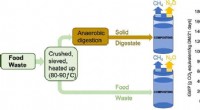
On the other hand, biogenic methane is sustainable. The microorganisms that create this type of methane are simply doing what comes naturally. The United States Department of Agriculture has organized more than 100 projects since 2003 to collect biomethane from cow manure. All that manure saved 8 million gallons of oil. In fact, most biofuel in the United States was obtained from cow manure.
In landfills, the power of garbage decomposition can be harnessed to reap natural gas, since the methanogens that eat the organic garbage in dumps produce methane. As long as humans (and cows) keep producing organic, biogenic methane, or biomethane, it will always be renewable.
Microorganisms are at the forefront of futuristic energy generation. In 2009, the Pacific Northwest National Laboratory, which is part of the U.S. Department of Energy, developed a process called catalytic hydothermal gasification. This process mines huge amounts of natural gas, or biomethane, out of algae. What's even more Earth-friendly about this process is that the carbon dioxide byproduct from burning this biofuel can be recycled. It's used to feed the algae.