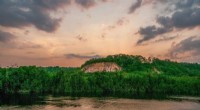
* Trees: Rainforests are home to a wide variety of trees, including hardwood trees such as mahogany and teak, as well as fruit trees such as mango and guava.
* Other plants: In addition to trees, rainforests contain a wide variety of other plants, including shrubs, vines, mosses, and ferns.
Consumers:
* Primary consumers: Primary consumers are animals that eat plants. They include a variety of animals, such as insects, birds, and monkeys.
* Secondary consumers: Secondary consumers are animals that eat other animals. They include reptiles, such as snakes and lizards, amphibians, such as frogs and toads, and mammals, such as jaguars and ocelots.
* Tertiary consumers: Tertiary consumers are animals that eat other animals that eat plants. They include top predators, such as eagles, hawks, and vultures.
Decomposers:
* Decomposers are organisms that break down dead plants and animals, returning their nutrients to the soil. They include a variety of organisms, such as bacteria, fungi, and arthropods, such as termites and ants.
The rainforest food chain is a complex and interconnected system, with each organism playing a vital role in maintaining the overall balance of the ecosystem. When even one of the elements of the food chain is compromised, the entire system can be affected.