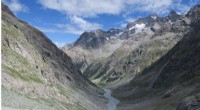
While climate does not directly affect altitude, altitude does have significant impacts on climate. At higher altitudes, air temperature and atmospheric pressure generally decrease, resulting in cooler temperatures and reduced air density. Precipitation patterns can also change with altitude, as rising air masses cool and release moisture, leading to variations in cloud formation, rain, and snow. The combination of temperature, air pressure, and precipitation variations with altitude results in distinct climate zones, influencing temperature ranges, humidity, vegetation types, and ecosystems across different elevation levels.