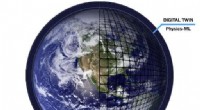
Even with billions of people living on Earth, you could pinpoint the location of each person in a building or city. It may take a lot of time, but you could do it by using a set of lines and coordinates called the geographic grid.
Ptolemy, a Roman mathematician, geographer, astronomer and astrologer, created the geographic grid sometime in the second century.
The geographic grid uses latitude and longitude lines. Latitude lines are invisible lines that run east to west around Earth. Longitude lines run north to south around the length of Earth.
Both latitude and longitude lines divide the Earth into 180 equal sections from north to south (latitude) and from east to west (longitude). The lines are measures in degrees.
The equator, which falls halfway between the North and South Poles at zero degrees latitude, marks the center of the Earth from north to south. The prime meridian, which goes through Greenwich, England, at zero degrees longitude marks the center of the Earth from east to west.
Understanding latitude and longitude can be confusing. Although latitude lines run from east to west, they give a north/south location. Longitude lines, while running from north to south, give an east/west location.
Pilots or ship captains use latitude and longitude lines to find the shortest distance between two points. You can also use the geographic grid to give a specific location, by giving the intersection of the latitude and longitude lines at that point.