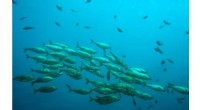
1. Variation: Within a population of organisms, there is natural variation in traits. This variation can be attributed to genetic differences, mutations, or environmental factors.
2. Inheritance: Traits that are advantageous or beneficial to an organism's survival and reproduction are more likely to be passed on to offspring. This is because individuals with favorable traits have a higher chance of surviving and producing more offspring, thus passing on their genes to the next generation.
3. Selection: The environment acts as a selective force, favoring individuals with beneficial traits. Organisms that are better adapted to their environment have a greater chance of survival and successful reproduction. Over time, this process leads to the accumulation of advantageous traits within a population, while less advantageous traits are gradually eliminated.
In essence, Darwin's principle of natural selection drives the process of evolution. It explains how populations of organisms change over generations in response to environmental pressures and selective forces. As a result, populations become better adapted to their specific environments, resulting in the diversification of species and the formation of new lineages. Darwin's principle continues to be a cornerstone of evolutionary biology, providing a framework for understanding the complexity and diversity of life on Earth.