One such behavior adaptation is the ability to change the angle of their leaves in order to maximize sunlight exposure. This is accomplished through a process called phototropism, which is a response to light. When a tree is exposed to light, the leaves will orient themselves so that they are perpendicular to the light source. This allows the tree to absorb as much sunlight as possible for photosynthesis.
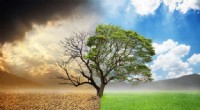
Another behavior adaptation of trees is the ability to drop their leaves in response to environmental conditions. This is called abscission, and it occurs when the tree senses that it is no longer receiving enough water or nutrients. By dropping their leaves, the tree reduces the amount of water it loses through transpiration. This can help the tree to survive in dry or cold environments.
Finally, trees can also use their roots to adapt to their environment. For example, some trees have roots that are able to grow deep into the ground in order to access water. Other trees have roots that are able to spread out and anchor the tree in the soil. This can help the tree to withstand strong winds or storms.
These are just a few of the many behavior adaptations that trees have evolved in order to survive and reproduce in their environment. By adapting to their surroundings, trees are able to thrive and contribute to the overall health of the ecosystem.