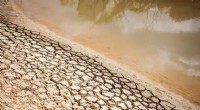
A new study has found that a catastrophic drought that occurred around 4,200 years ago was likely the most severe in the past 10,000 years. The drought, which lasted for more than a century, caused widespread crop failures and social unrest in the Middle East and North Africa.
The study, published in the journal Nature, was led by researchers from the University of Cambridge. They analyzed tree rings, lake sediments, and other geological records from around the world to reconstruct the climate of the past 10,000 years.
The researchers found that the drought was caused by a combination of factors, including changes in the Earth's orbit, shifts in the jet stream, and a decrease in solar activity. These factors led to a significant decrease in rainfall in the Middle East and North Africa, which in turn caused widespread crop failures and social unrest.
The study's findings have raised concerns about the potential for future droughts of similar severity. Climate change is expected to lead to more extreme weather events, including droughts, heat waves, and floods. If these events become more severe, they could have a devastating impact on human society.
How severe can climate change become?
Climate change is a serious threat to the planet and its inhabitants. The effects of climate change are already being felt around the world, in the form of rising sea levels, more extreme weather events, and changes in plant and animal life.
If climate change continues to worsen, the effects could be catastrophic. Sea levels could rise by several feet, inundating coastal cities and displacing millions of people. More extreme weather events, such as hurricanes, floods, and droughts, could become more frequent and more severe. These events could cause widespread damage and loss of life.
Climate change could also have a significant impact on food production. Changes in temperature and precipitation could make it difficult for farmers to grow crops. This could lead to food shortages and price increases, which could have a devastating impact on the world's poorest people.
The good news is that it is not too late to take action on climate change. We can reduce greenhouse gas emissions and transition to a clean energy economy. By doing so, we can help to mitigate the effects of climate change and protect our planet for future generations.