Bipedalism: Lucy belonged to the genus Australopithecus, a group of early hominins characterized by bipedalism, the ability to walk upright on two legs. Lucy's pelvic and lower limb bones show adaptations for bipedalism, indicating that she and her species were primarily terrestrial walkers.
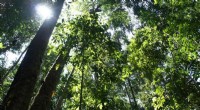
Arboreal Adaptations: Despite their bipedalism, Australopithecus afarensis retained some features associated with arboreal living. Their long arms and curved fingers suggest that they were skilled climbers and could navigate trees efficiently. Lucy's shoulder joint also shows signs of adaptation for climbing and reaching.
Transitional Nature: Lucy's existence represents a critical transition in human evolution, bridging the gap between earlier, more ape-like ancestors and later hominins who were predominantly terrestrial. She demonstrates a blend of arboreal and terrestrial adaptations, reflecting the gradual shift toward a more upright posture and ground-dwelling lifestyle.
Environment: Lucy and other Australopithecus afarensis lived in a diverse and changing environment that included both forested areas and open grasslands. This dual habitat may have influenced their locomotor behavior, necessitating both climbing and walking depending on the terrain and resource availability.
In summary, Lucy, as a member of Australopithecus afarensis, exhibited both walking and climbing abilities. They were terrestrial bipeds primarily but retained arboreal adaptations for navigating trees. Lucy's locomotor behavior represents an important stage in human evolutionary history, showcasing the transition from tree-dwelling ancestors to fully terrestrial humans.