Introduction:
In regions severely impacted by water scarcity, finding a harmonious balance between providing adequate water for crop production and conserving this precious resource is a daunting challenge. Researchers are devoting significant efforts to understanding how much irrigation water is "enough" to sustain crop growth and mitigate the strain on water resources. In this article, we explore the methods employed by these researchers to precisely determine this delicate balance in water-scarce regions.
1. Soil Moisture Monitoring:
One fundamental approach involves monitoring soil moisture levels. Researchers install soil moisture sensors at strategic depths within the crop root zone to continuously measure the water content. By correlating soil moisture data with crop growth and yield, they can identify critical thresholds below which yields decline. This enables targeted irrigation when moisture levels drop to these thresholds.
2. Crop Water Requirement Assessments:
Evapotranspiration, the combined loss of water through evaporation from soil and transpiration from plants, serves as a valuable metric in determining crop water requirements. Researchers calculate evapotranspiration rates using various tools and models, including weather stations, satellite data, and simulation models. Understanding crop water needs allows for more efficient water allocation.
3. Plant Stress Indicators:
Physiological indicators of plant stress, such as leaf temperature, canopy reflectance, and stomatal conductance, provide insights into water needs. Researchers utilize remote sensing technologies and advanced imaging techniques to monitor these parameters, enabling early detection of water stress and informing irrigation decisions.
4. Modeling Crop-Water-Yield Relationships:
Researchers develop complex mathematical models that simulate the intricate relationships between crop growth, water availability, and yield. These models consider soil properties, climatic conditions, crop characteristics, and irrigation practices. By simulating different scenarios, researchers can optimize irrigation strategies to maximize yield while minimizing water use.
5. Participatory Approaches and Farmer Engagement:
Involving farmers in the research process is crucial for successful implementation of water-saving techniques. Researchers engage farmers in participatory approaches to validate scientific findings and gather insights from practical experiences. This collaborative approach ensures that recommendations are context-specific and practical for local conditions.
6. Field Trials and Large-scale Demonstrations:
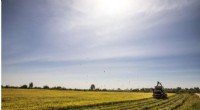
Researchers establish controlled field trials to assess the impact of different irrigation practices on crop growth, water use efficiency, and economic returns. Furthermore, large-scale demonstrations of successful irrigation strategies provide tangible evidence to farmers, encouraging adoption and scaling up of water-saving technologies.
7. Policy and Stakeholder Engagement Beyond Research:
Researchers actively engage with policymakers and stakeholders to influence water management policies, regulations, and incentives. By advocating for sustainable water use practices, they foster a supportive environment for implementing water-saving strategies in water-scarce regions.
Conclusion:
Researchers employ a multi-faceted approach to precisely determine the amount of water that is "enough" for crop production in water-scarce regions. Through soil moisture monitoring, crop water requirement assessments, plant stress indicators, modeling, farmer engagement, field trials, and policy advocacy, they strive to strike a balance between agricultural productivity and water conservation. By optimizing irrigation practices, these efforts aim to ensure food security, environmental sustainability, and resilience in regions facing water challenges.