Introduction:
Rivers play a pivotal role in shaping Earth's landscapes through their continuous erosion, transportation, and deposition of sediments. While the concept of water flow as a primary driver of river dynamics is well-established, recent research has shed light on an additional layer of complexity—the creeping movement of riverbeds themselves. By delving into this fascinating phenomenon, scientists are deepening our understanding of how rivers sculpt the terrain they traverse over vast timescales.
1. Creep Mechanics:
Riverbeds comprise various sediment particles, ranging from fine silts and sands to larger gravels and cobbles. When subjected to the incessant force of flowing water, these particles don't just get carried downstream but also undergo a gradual downstream movement along the riverbed. This creeping motion is driven by the interactions between moving water and the uneven surface of the riverbed.
2. Factors Influencing Creeping:
Several factors influence the rate of riverbed creeping, including:
- Water Velocity: Higher water velocities exert more force on the riverbed particles, enhancing their downstream movement.
- Sediment Characteristics: Coarser sediments, such as gravels, exhibit higher resistance to creeping compared to finer sediments.
- Bed Topography: Irregularities and obstacles on the riverbed can impede the creeping process, causing variations in the movement of sediments.
3. Impacts on Landscape Evolution:
Riverbed creeping contributes to various landscape-shaping processes:
- Channel Formation: Gradual sediment displacement creates channels and modifies river courses over time.
- Sediment Transport: Creeping helps transport sediments downstream, influencing the formation of depositional features like sandbars and deltas.
- Erosion and Deposition: As sediments creep, they abrade the riverbed and transport eroded material, shaping river morphology and its surrounding environment.
4. Integrating Creeping with Fluid Flow:
To fully comprehend river dynamics, scientists combine insights from creeping mechanics and fluid flow principles. This integrated approach sheds light on how these two processes interact to drive river behavior and modify landscapes.
- River Meandering: The combination of water flow and creeping influences the formation of meandering river patterns, creating bends and loops in the river course.
- Sediment Sorting: The interplay of flow and creeping promotes the sorting of sediment particles, resulting in distinct sediment distribution patterns within rivers.
5. Implications for River Management:
Understanding creeping dynamics has implications for river management and engineering:
- River Restoration: Incorporating knowledge of creeping processes into restoration efforts ensures the stability of riverbeds and ecosystems.
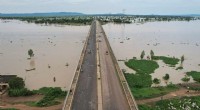
- Flood Control: Creeping can contribute to sediment accumulation and the formation of natural levees, which play a role in flood management.
- Sediment Transport Management: Controlling sediment movement through creeping can help mitigate the impacts of erosion and sedimentation on infrastructure and aquatic habitats.
Conclusion:
The realization that rivers not only flow but also creep has revolutionized our understanding of landscape evolution. By unraveling the intricate mechanisms of creeping and integrating them with traditional fluid flow principles, scientists are gaining unprecedented insights into how rivers shape the Earth's surface. This knowledge is essential for managing and preserving riverine ecosystems, mitigating the impacts of human activities, and appreciating the dynamic beauty of our ever-changing landscapes.