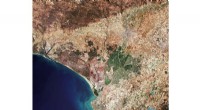
Satellite imagery, with its ability to capture detailed information about the Earth's surface, plays a crucial role in botanical big data. Satellite-derived data helps scientists monitor changes in vegetation cover, track plant phenology (seasonal changes in plant growth and development), and identify vulnerable plant habitats. By analyzing time-series satellite data, researchers can detect long-term trends and shifts in plant species distributions, offering clues about their responses to changing environmental conditions.
Ecological surveys contribute another valuable component to botanical big data. These surveys involve systematic observations and data collection on plant communities in different ecosystems. Ecological data encompasses information on species composition, abundance, and interactions with other organisms. By integrating ecological survey data with satellite imagery, scientists can link plant occurrences with environmental variables, such as temperature, precipitation, soil type, and land use patterns. This information helps establish relationships between plant species and their habitats, enabling researchers to predict how they might respond to future environmental changes.
Herbarium records, representing historical collections of preserved plant specimens, serve as a valuable resource in botanical big data. These collections document plant diversity over time, providing insights into past plant distributions, species' adaptations, and changes in plant communities. Herbarium specimens also contain valuable information such as collection location, date, habitat details, and associated environmental data. By integrating herbarium data with other sources of botanical big data, scientists can analyze long-term trends in plant populations, identify shifts in species ranges, and assess the impact of historical environmental changes on plant communities.
Botanical big data analytics employ sophisticated computational techniques and modeling approaches to extract meaningful insights and patterns from these vast datasets. Machine learning algorithms, statistical models, and predictive analytics enable researchers to identify key environmental variables influencing plant species distributions, predict their responses to future climate scenarios, and assess the vulnerability of plant communities to various threats.
The integration of botanical big data with other relevant datasets further enhances the predictive power of these models. For instance, combining plant species distribution data with soil maps, climate projections, and land use change scenarios provides a comprehensive understanding of how environmental changes will impact plant habitats and biodiversity. This knowledge supports the development of conservation strategies, habitat restoration plans, and sustainable land management practices that safeguard plant diversity in a changing world.
In summary, botanical big data, encompassing satellite imagery, ecological surveys, herbarium records, and advanced analytics, offers a powerful tool for predicting how plant species will respond to environmental change. By harnessing the wealth of information contained within these data sources, scientists can gain valuable insights into plant-environment relationships, identify vulnerable species, and inform conservation efforts, ensuring the resilience of plant diversity in the face of global challenges.