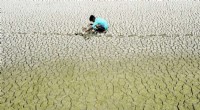
The extreme drought that has gripped California for the past several years has taken a devastating toll on the state's forests. Aerial images taken in recent months show vast swaths of foothill forest that have been completely decimated by the drought.
The images, taken by the United States Geological Survey (USGS), show that the drought has killed millions of trees in the Sierra Nevada and Cascade Range. The dead trees are now standing like matchsticks, creating a fire hazard that could devastate even more of the state's forests.
The drought has also caused widespread damage to the water supply, as well as agricultural crops, and wildlife habitat. The estimated cost of the damage is in the billions of dollars.
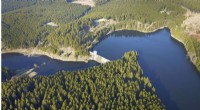
One of the hardest-hit areas is the Lake Tahoe Basin, where the lake level has dropped to its lowest point in recorded history. The decline in water level has resulted in a significant loss of habitat for fish and other aquatic life. It has also put the water supply for more than 2 million people at risk.
The drought has also been a major setback for efforts to fight climate change. Forests play a critical role in absorbing carbon dioxide, a greenhouse gas that contributes to climate change. The loss of millions of trees means that there is less carbon dioxide being absorbed from the atmosphere, which will make it more difficult to mitigate the effects of climate change.
The drought in California is a reminder of the vulnerability of our planet to climate change. It is also a wake-up call for states to take action to reduce their greenhouse gas emissions and fight climate change.
Here are some things that can be done to help mitigate the effects of the drought:
- Conserve water. One of the best ways to help the drought is to reduce your water usage. This can be done by taking shorter showers, fixing leaky faucets, and watering your lawn less frequently.
- Plant drought-resistant plants. When planting new plants, choose plants that are adapted to dry climates. This will help you reduce your water usage and save money on your water bill.
- Support sustainable agriculture. Many agricultural practices contribute to drought. Choose to buy food from farmers who use sustainable practices, such as drip irrigation and crop rotation.
- Reduce your carbon footprint. Carbon dioxide contributes to climate change, which leads to more frequent and severe droughts. You can reduce your carbon footprint by driving less, using less energy in your home, and eating less meat.
By taking these actions, we can help to mitigate the effects of the drought and protect our planet from climate change.