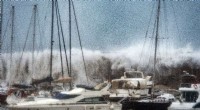
1. Overtopping: This occurs when the water level exceeds the height of the flood defences, causing them to be overtopped and water to flow over them. Overtopping can be caused by extreme rainfall events, high river flows, or a combination of both.
2. Breaching: Breaching occurs when a section of the flood defences breaks or collapses, allowing water to flow through the breach. Breaching can be caused by structural failure, erosion, or damage caused by debris or objects carried by the floodwaters.
3. Seepage: Seepage occurs when water seeps through the pores or cracks in the flood defences, leading to groundwater flooding in the protected area. Seepage can be a problem in areas with high groundwater levels or where the flood defences are not properly designed or constructed.
4. Structural failure: Structural failure occurs when the flood defences are unable to withstand the forces exerted by the floodwaters, leading to their collapse. Structural failure can be caused by poor design, construction defects, or inadequate maintenance.
5. Human error: Human error can also contribute to the failure of flood defences. This can include errors in design, construction, operation, or maintenance of the flood defences.
To minimise the risk of flood defence failure, it is important to:
- Ensure that flood defences are designed and constructed to withstand the expected flood conditions.
- Regularly inspect and maintain flood defences to identify and address any potential problems.
- Develop and implement emergency plans in case of flood defence failure.
- Educate communities about flood risks and how to prepare for and respond to flooding.