Introduction to Topology
Topology, a branch of mathematics, deals with the study of geometric properties and transformations that preserve these properties. Topological insulators, a class of materials, and the Earth's climate system demonstrate fascinating similarities in their behavior due to their underlying topological features.
Topological Insulators:
Topological insulators are materials characterized by a unique band structure that gives rise to insulating behavior in the interior but conducting behavior on their surface. They possess topological invariants, which are numbers that describe their topological properties and remain unchanged under continuous deformations of the material.
Earth's Climate System:
The Earth's climate system is a complex, dynamic system that involves interactions between the atmosphere, oceans, biosphere, and cryosphere. It exhibits emergent phenomena, such as weather patterns and long-term climate cycles, which can be understood through the lens of topology.
Topological Features:
1. Phase Transitions: Phase transitions in both topological insulators and the Earth's climate system are associated with changes in topological invariants. For example, in topological insulators, a phase transition can occur when the band structure undergoes a topological change. Similarly, in the Earth's climate system, a phase transition may happen when the system transitions from one stable state to another, such as from an ice age to an interglacial period.
2. Robustness: Topological features are robust and resilient to small perturbations. In topological insulators, the topological order persists under deformations that preserve the topological invariants. In the Earth's climate system, certain aspects, like the existence of stable climate states or the overall circulation patterns, remain relatively stable despite minor fluctuations.
3. Boundary Effects: Surface states in topological insulators play a crucial role in their transport properties. Similarly, in the Earth's climate system, boundary effects, such as coastal upwelling or the interaction of the atmosphere with the land-sea interface, significantly impact weather patterns and climate dynamics.
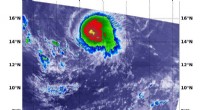
4. Emergent Phenomena: Topological insulators exhibit emergent properties, such as the quantization of surface conductance, which arises due to their underlying topological structure. The Earth's climate system also displays emergent phenomena, such as the formation of hurricanes, the El Niño-Southern Oscillation, or the global carbon cycle, that result from the complex interplay of its components.
Exploring these topological connections can lead to new insights into the dynamics and behavior of both topological insulators and the Earth's climate system, advancing our understanding of complex phenomena in condensed matter physics and Earth sciences.