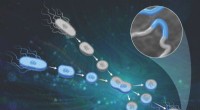
According to the lipid-mediated self-assembly theory, the first step in the formation of life was the spontaneous formation of lipid vesicles, which are small, membrane-bound compartments. These vesicles could have formed in the early Earth's oceans, which were rich in organic molecules.
Once the lipid vesicles formed, they could have begun to interact with each other and with the surrounding environment. This interaction could have led to the formation of more complex structures, such as protocells, which are primitive cells that are capable of carrying out basic functions such as metabolism and reproduction.
The lipid-mediated self-assembly theory has several advantages over traditional theories of the origin of life. First, lipids are much more abundant in the early Earth's oceans than proteins or nucleic acids. Second, lipids are able to form spontaneously into vesicles, which can provide a protective environment for the formation of more complex molecules. Third, lipids can interact with each other and with the surrounding environment to form more complex structures.
The lipid-mediated self-assembly theory is a new and exciting theory that challenges traditional views of the origin of life. This theory suggests that lipids played a key role in the formation of life on Earth, and it provides a new framework for understanding how life could have arisen from the primordial muck.
Here is a summary of the lipid-mediated self-assembly theory:
1. Lipid vesicles form spontaneously in the early Earth's oceans.
2. Lipid vesicles interact with each other and with the surrounding environment to form more complex structures.
3. Protocells, which are primitive cells, form within lipid vesicles.
4. Protocells carry out basic functions such as metabolism and reproduction.
5. Over time, protocells evolve into more complex organisms, eventually giving rise to the diversity of life on Earth.