A team of scientists from the University of California, Davis, has developed a new statistical approach for environmental measurements that lets the data determine how to model extreme events. The approach, called "data-driven extreme value analysis," uses a combination of statistical methods to identify the most appropriate model for extreme events in a given data set.
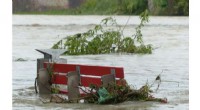
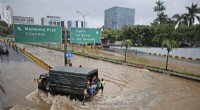
Extreme events are rare, but they can have a significant impact on the environment and society. For example, extreme weather events such as floods, droughts, and wildfires can cause widespread damage and loss of life. In order to mitigate the risks associated with extreme events, it is important to be able to accurately model their occurrence.
Traditional methods for extreme value analysis typically assume that the data follows a specific distribution, such as the Gumbel or Weibull distribution. However, this assumption is not always valid, and it can lead to inaccurate estimates of extreme event probabilities. The new data-driven approach does not make any assumptions about the distribution of the data, and it allows the data to determine the most appropriate model.
The scientists tested the new approach on a variety of environmental data sets, including precipitation, temperature, and wind speed. The results showed that the new approach was able to more accurately model extreme events than traditional methods.
The new approach has a number of advantages over traditional methods for extreme value analysis. First, it does not require any assumptions about the distribution of the data. Second, it is able to identify the most appropriate model for extreme events in a given data set. Third, it is more accurate than traditional methods, especially for data sets with limited sample sizes.
The new approach is still under development, but it has the potential to revolutionize the way that extreme events are modeled. By allowing the data to determine the most appropriate model, the new approach can provide more accurate estimates of extreme event probabilities, which can help to mitigate the risks associated with these events.
The scientists published their findings in the journal "Water Resources Research."